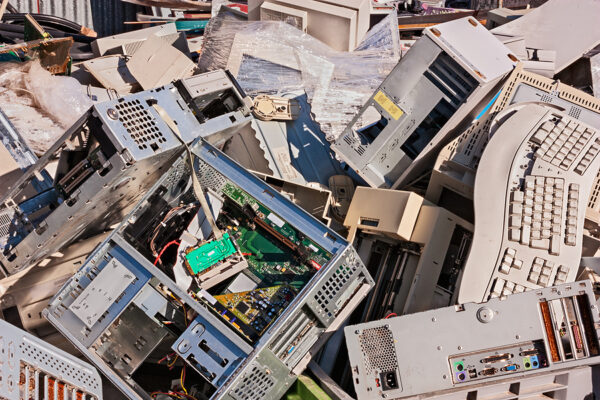
The United Nations Institute for Training and Research (UNITAR) found that the amount of e-waste generated between 2010 and 2022 increased by 82%. Over the next five years, it’s expected to rise another 32%, to a staggering 90.3 tons.
To make the technology that the world depends on, rare earth elements are necessary. Currently, only 1% of the demand for rare earth elements is achieved through recycling. The importance of sustainability cannot be ignored, and it starts by recycling old tech.
The Pillars of Sustainability Goals for Businesses
A company’s sustainability goals focus on three main areas:
- Economic: A business’s initiatives must support long-term finances. Efficient use of water and electricity, sustainable practices that benefit everyone, and managing risk are all part of it.
- Environmental: A company must consider their impact on the planet. This means being energy-efficient, reducing the business’s carbon footprint, and choosing supplies and products that align with the company’s environmental goals.
- Social: A company needs to look at the impact of their company on the community and people in it. Products chosen and business practices should support the well-being of employees and the community surrounding the business. Outreach programs and community partnerships are also important.
When you look at these pillars in terms of a company’s older electronics, there are ways to recycle or refurbish and donate the items in responsible, ethical ways. Recycling also benefits the business and its customers when done in a thoughtful, responsible way.
The Business Benefits of Recycling Old Tech
As a business owner, old, unused, and broken electronics require responsible recycling. Letting them stack up in a storage unit, supply room, or basement isn’t helpful. Set a yearly deadline and do a company-wide cleanout of electronics that aren’t being used. This ensures you gain the benefits of recycling as soon as you can.
1. Brand Image and Corporate Social ResponsibilityA positive brand image helps your business soar. When consumers and potential clients like what they see you’re doing and have done in the past, they’re more likely to give you their business. Responsible recycling helps boost your brand image.
It’s also an aspect of corporate social responsibility (CSR). CSR is a business’s responsibility to the community around it. A company embracing CSR makes a positive impact through philanthropy, economic responsibility, sustainability, and environmental responsibility. The company shows it isn’t there just for profit. It’s there to make the community and world a better place.
2. Circular Economy and Resource ConservationRecycling old electronics supports a circular economy. Instead of throwing away and buying new, a company recycles old electronics to recover rare earth metals, plastic, glass, and other metals for reuse in new technology.
Resource conservation is important. Rare earth metals like yttrium are important in lasers. Lanthanum and neodymium are used in the manufacture of certain types of batteries, including hybrid batteries. If the Earth is depleted of rare earth metals, prices on some electronics could skyrocket, and production could halt while new sources are found.
Another concern is that China controls the majority of the world’s rare earth metals. In 2025, China imposed restrictions on exports of seven of them in response to increasing tariffs. The U.S. is developing a rare earth metals processing plant, but when it becomes fully operational, it cannot meet current needs.
This is why recycling electronics is essential. The more resources that can be reused, the better it is for conservation efforts and the overall prices of new technology.
3. Compliance and Risk MitigationMany U.S. states have laws in place that prevent the disposal of old electronics and peripherals in landfills. Recycling is mandatory. Tossing old office equipment into the trash isn’t an option. Businesses must comply with local, state, and federal rules.
Risk mitigation is also a consideration. Many electronic devices, such as copiers, laptops, and printers, contain sensitive data. If your business has computers where you collect information like dates of birth, SSNs, credit card numbers, or bank details, you must protect that data. Recycling with a specialist in ITAD protects that data and protects you from fines and lawsuits.
4. Energy SavingsReplacing old technology with new tech saves energy. Each year, efforts go into making electronics more efficient. Battery life is better, electricity consumption is lessened, and components are easier to replace.
When you can replace components that are older or broken, you avoid buying new ones. That reduces the demand at manufacturing plants that consume large amounts of energy every day.
5. Job CreationRecycling creates jobs. You need drivers to come pick up old technology and deliver it to a recycling and ITAD facility. The facility needs workers to separate, sort, and refurbish electronics for resale, donation, or manufacturing stock.
6. Pollution Reduction and a Lowered Carbon FootprintRecycling lowers your carbon footprint. When you choose items that are made with recycled materials and ensure your old items are recycled for new production materials, you help ease pollution from mining and manufacturing of new plastic stock.
How Consumers Win When Businesses Recycle Tech Responsibly
Consumers also benefit from the responsible recycling of old electronics.
1. Environmental ProtectionToday’s electronics contain so many problematic metals. When items end up in landfills, they can leach into the groundwater and soil over time. Recycling keeps hazardous materials like lead and mercury out of landfills.
2. Financial IncentivesMany companies offer discounts on your purchase when you trade in an older model at the same time. You’ve seen big brands like Apple and Google provide substantial savings on the newest phones if you trade in an old model.
3. Personal Data SecurityRecycling with a company specializing in ITAD ensures data security. Your personal information is destroyed as part of the recycling process. With items like passwords, email accounts, bank information, and birthdays stored on phones, tablets, and laptops, privacy is extremely important.
Choose a Certified ITAD Provider
When you’re recycling your business electronics or consumer electronics, choose an e-recycling company that is focused on:
- The environment
- A circular economy
- Workers
- The community
One way to do this is by choosing an ITAD and e-recycling firm with the following certifications.
- AICPA SOC 2: Has controls in place to protect confidentiality, privacy, and security.
- AARC 360: Excels in cybersecurity risk management and IT compliance.
- CO2 Neutral: Achieves carbon neutrality and sustainability.
- E-Stewards: Investigates and vets all downstream processors and vendors.
- ISO 9001: Follow specific frameworks for quality, customer satisfaction, and business improvement.
- ISO 14001: Follow specific frameworks to reduce environmental impact and meet environmental regulations.
- ISO 45001: Follow specific frameworks to establish and maintain a safe and healthy workplace.
- NAID AAA: Comply with all data protection laws.
- R2: Maintain standards that focus on environmental sustainability, data security, and worker health and safety.
ERI holds all of those certifications and maintains them through surprise inspections. We’re a leader in data destruction and electronics recycling. Connect with us about our asset remarketing program, where you get money back on items that can be refurbished. It helps offset the cost of business electronics recycling.