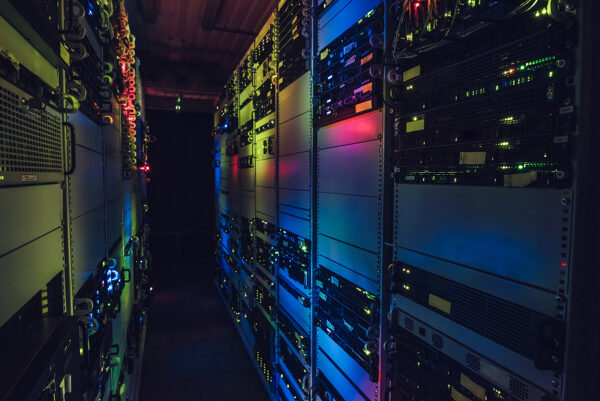
A typical data center has several data storage devices, computer services, and a variety of networking equipment, such as routers and switches. As of 2023, U.S. data center energy use neared 176 terawatt-hours. It accounted for close to 4.4% of the energy used in the U.S. It’s expected that this number will reach 12% in the next three years.
As the fields of AI and crypto grow, the need for powerful data centers continues. The U.S. Department of Energy issued guidance regarding optimizing energy consumption. One of the recommendations is to aim for an Energy Star-certified data center. As you replace and upgrade equipment, environmental regulations also shape how electronics recycling happens.
All About Data Center Decommissioning and Recycling
Data center decommissioning is the process of dismantling an organization’s IT infrastructure after a secure shutdown of a data center that’s no longer needed. The equipment includes all servers, networking equipment, and storage systems. Several steps are required.
- Electronics are inventoried and assessed.
- Data is destroyed or completely erased.
- Electronics are prepared for transportation to another location.
- Data center equipment is transported to an electronics recycling facility.
Before you even navigate the environmental regulations, you need to consider data security. A data center decommissioning must include measures to protect personally identifiable information (PII) and sensitive personally identifiable information (SPII).
PII and SPII are sensitive data stored in data centers. It’s usually protected with access management and encryption, but there’s a risk of data loss if it’s not handled correctly during decommissioning. This data includes:
- Bank, credit, or debit card account numbers (SPII)
- Biometrics such as a fingerprint or retinal scan (SPII)
- Birthdate (PII)
- Driver’s license number (SPII)
- Email address (PII)
- Immigration status (PII)
- Medical records (SPII) are also classified as Protected Health Information (PHI)
- Name and address (PII)
- Passport number (SPII)
- Phone number (PII)
- Sexual orientation (PII)
- Social Security Number (SPII)
Medical records cover all PHI, including:
- Allergies
- Family medical history
- Health records
- Lab test results
- Medical bills
- Medical prognosis
- Medications you take
- Mental health records
- Treatment plans
- X-rays
Should you fail to have this data destroyed before handing over data center storage devices, it could be recovered and used to cause harm. It becomes your fault and opens the door to legal penalties, government fines, and damage to your organization’s reputation.
Navigating the Environmental Regulatory Landscape in the U.S.
E-waste regulations vary from state to state. On a federal level, the Resource Conservation and Recovery Act classifies some e-waste as hazardous waste. Federal rules regarding hazardous waste cover:
- Cathode ray tubes (CRTs)
- Polychlorinated biphenyls (PCBs)
- Solar panel waste
- Universal waste (Batteries, lamps, mercury-containing equipment)
Half of the U.S. states and the District of Columbia have additional environmental regulations.
- California passed a law in 2003.
- Maine passed a law in 2004.
- Maryland passed a law in 2005.
- Washington passed a law in 2006.
- Connecticut, Minnesota, North Carolina, Oregon, and Texas passed laws in 2007.
- Hawaii, Illinois, Michigan, Missouri, New Jersey, Oklahoma, Rhode Island, Virginia, and West Virginia passed laws in 2008.
- Indiana and Wisconsin passed laws in 2009.
- New York, Pennsylvania, South Carolina, and Vermont passed laws in 2010.
- Utah passed a law in 2011.
- The District of Columbia passed a law in 2014.
E-waste regulations are designed to protect the environment. Several items found in e-waste are hazardous to the environment. Electronics such as computers, data storage devices, and servers contain dangerous chemicals and metals. They include:
- Aluminum – Excessive amounts in the air, soil, or water can lead to anemia, bone health issues, nervous system issues, and respiratory issues.
- Arsenic – Long-term arsenic exposure increases the risk of diabetes, heart disease, liver disease, nervous system issues, and poor digestive health.
- Cadmium – Exposure to high amounts of cadmium can lead to anemia, brittle bones, cancer, kidney damage, and pulmonary edema.
- Flame Retardants – Long-term exposure can increase the risk of certain cancers, disrupt your hormone levels and impact fertility, and cause developmental and neurological disorders.
- Lead – The brain, kidney, nervous system, and reproductive system are all at risk with exposure to high levels of lead.
- Mercury – Mercury impacts your central nervous system, heart, and kidneys.
- Selenium – Long-term exposure to high levels of selenium increases your risk of type 2 diabetes, kidney failure, nervous system damage, and prostate cancer.
When electronics end up in landfills or are not recycled, environmental protections are compromised, increasing the risk of human exposure to those and other contaminants. When electronics are not correctly handled, workers and community members risk exposure. This is why it’s so important that data center decommissioning comply with all federal and state regulatory requirements.
When there are state regulations for e-waste, you need to follow all state rules, as well as federal laws and industry-specific regulations like CCPA, FISMA, GDPR, HIPAA, and SOX. Even if a specific law does not bind you, protecting consumer and employee data is crucial. Data security must be protected during data center decommissioning.
Key Concerns With Electronics Recycling
IT asset disposition (ITAD) vendors and data center operators must create a comprehensive approach to data center decommissions. If anything goes wrong, it can end up a costly lesson. From the very beginning of the process to the final steps, data security and environmental regulations must both be key concerns.
To ensure your decommissioning project goes smoothly, ask these questions:
- What is my budget?
- What legal requirements is my business responsible for following?
- What ITAD and e-waste recycling partner possesses the certifications and experience I need?
Certifications vary, but at a bare minimum, look for companies that hold:
- e-Stewards – A standard that goes to electronics recyclers who value and hold their company responsible for e-waste processing, data security, and environmental protection for their workers and the world.
- ISO 9001 – This certification is awarded to companies that continuously demonstrate that their products and services meet regulatory requirements.
- ISO 14001 – ISO 14001 applies to companies with an Environmental Management System that ensures they strive for continued improvements in environmental performance. They meet environmental regulations, but continuously work to do even better.
- NAID AAA – Awarded to e-recycling companies that meet high standards for data security and destruction.
- R2 – Goal is to keep electronics out of the waste stream and support a circular economy.
The Future of ITAD and E-Recycling
The world’s businesses and consumers purchase and use electronics faster than the assets are properly recycled. We’ve all seen prices on components like graphics cards and memory chips. Recycling is the answer to these shortages.
When copper, silicon, and aluminum are recycled rather than mined and refined, it helps prevent these shortages. It also keeps electronics out of landfills, where they break down over decades and leach into soil and possibly enter the air and groundwater.
Just a few decades ago, it was commonplace to throw away batteries, small appliances, cables, light bulbs, external storage devices, and USB memory sticks. Every time, it added plastic, metal, and other hazardous materials to the landfill. While they’re lined, what happens if that liner fails 50 years from now?
Plus, imagine what would happen if your client database were stored on a memory stick and someone else picked it up and accessed the data? The environment and personal privacy are equally important. That’s why lawmakers enact new regulations.
ERI is your partner in data center decommissionings. With facilities scattered across the U.S., every corner of the nation benefits from local ITAD and e-waste recycling services. We come to your location, discuss the value of the electronics you’re recycling, and help you recover as much value as possible. That helps cover some of the cost of the data center decommissioning project.
Our ITAD and e-recycling company holds multiple certifications, extending well beyond R2 and e-Stewards. We offer data destruction services that meet basic needs or that meet criteria for top-secret, government data. Reach out to us to discuss your company or organization’s upcoming decommissioning.