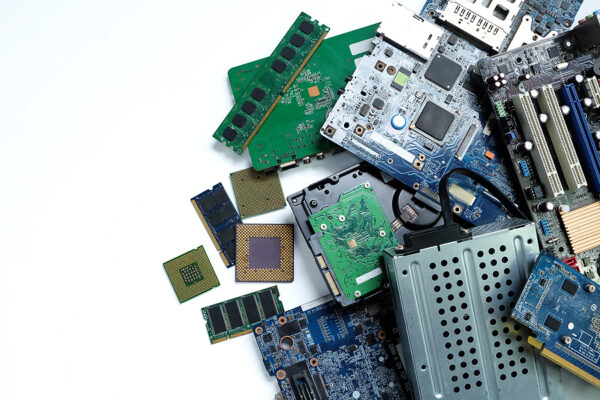
The average person discards 47 pounds of electronic waste every year in the U.S., which translates to approximately 500 pounds of e-waste every second. Estimates are that only 25% of electronics are recycled correctly. Low recycling rates are concerning for a multitude of reasons.
While recycling rates remain low, the electronics manufacturing industry continues to grow. Approximately 30 billion pounds of electronics are produced annually. It’s growing faster than recycling facilities are prepared to handle.
That’s why a circular economy is essential. Companies and individuals need to break the make-take-dispose cycle that’s tied to electronics. It’s time for shareholders and administrators to adopt careful IT asset management procedures.
The Crisis Surrounding E-Waste
Between 2020 and 2023, a global chip shortage affected many tech companies, driving up prices and making it difficult to obtain components such as graphics cards. Although the situation has improved, problems still arise from time to time, and prices remain higher than they were. In 2025, China halted its chip shipments to the U.S., resulting in a global shortage.
China is the world’s largest supplier of rare earth minerals, which are essential for a wide range of applications, including wind turbines and computers. With China controlling 85% of rare earth processing and 90% of magnet manufacturing, the U.S. relies heavily on China; however, trade wars can impact supplies.
The U.S. is trying to shift towards other avenues, but it takes time. It also takes supplies, which is where recycling comes in.
Instead of using electronics faster than necessary, people can get parts to repair or upgrade electronics. When there is no use for recovered parts, the piece of tech is recycled to recover materials like copper, silver, aluminum, and others. The recovered materials are used in the production of new electronics, supporting a circular economy.
IT Asset Management Goals and the Circular Economy
Proper management of IT assets is essential. If your company has been replacing computers every couple of years, it’s wasting money. Acquiring new computers is both costly and time-consuming. Even once they arrive, time is needed to install them, get them working correctly on your network, and train employees on any changes.
Support the circular economy without sacrificing productivity. It’s easier to do than you might expect.
1. Reuse When PossibleKeep records on the stage of every IT asset within your business. Generally, companies use three ratings.
- Internal reuse – Items are still usable and would benefit other employees in a different department.
- Refurbishing for resale – The item isn’t valuable to your company, but if it’s refurbished, it could benefit a school or other organization.
- Remove valuable components and recycle – Although the item’s value is past, you can recover some parts, such as a disc drive or memory card, and recycle the rest.
Analyze IT asset management data to identify opportunities for reusing existing computers and office equipment. Your HR department needs a faster printer. Instead of recycling the existing one, give it to a worker who prints documents, but doesn’t need them as quickly as HR does.
2. Upgrade and Repair to Increase Value and LifespanYour IT team should extend the life of existing assets by making upgrades and repairs whenever possible. The longer an asset is used, the more value you’ve gotten from the initial purchase.
Thanks to Right to Repair laws in many states, it’s easier to get parts and instructions for tech repairs. All 50 states have introduced Right-to-Repair legislation. The legislation has been passed in these states:
- California
- Colorado (Effective January 1, 2026, for consumer electronics)
- Massachusetts
- Minnesota
- New York
- Oregon (Effective January 1, 2025, but won’t be enforced until January 1, 2027)
- Washington (Effective January 1, 2026)
The longer you extend the lifespan of your current IT assets, the longer you have to save for future purchases. It’s worth getting the full life from your IT assets and having extra to spend on quality electronics in the future.
3. Recycle IT Assets ProperlyIf your IT asset has reached the end of its life or is irreparable, it’s time to recycle it responsibly. Choosing the right ITAD provider is crucial, especially if your devices contain sensitive information, such as that of clients, employees, or shareholders. Data destruction is essential and must be done properly. Shortcutting may save money, but it could lead to your company’s downfall.
Know When to Repair, Refurbish, or Harvest Components
Your company needs a team to monitor the usefulness of all IT assets and how often they’re used. Departments shouldn’t experience low productivity due to equipment that constantly requires rebooting or repair.
Your IT team needs to keep data on repairs and usage. The cost of repairs must be compared to the cost of new equipment. If repairs reach 75% of the price of a new device, it’s time to replace it.
At that point, you have to decide between refurbishing and recycling. Refurbishing is a process where an electronic device is cleaned of any data, tested to ensure it works properly, and resold or donated.
Recycling starts by harvesting any functional components. Parts such as glass screens, graphics cards, RAM, and SSDs still retain value. They can be removed and stored for future repairs.
The remaining component is sent to shredders, where it is chopped into small pieces. Those pieces are sorted by type, including glass, metal, and plastic, and then processed for reuse in manufacturing lines.
The Right ITAM Partner Makes a Big Difference
IT asset management does more than support a circular economy. It’s a wise financial move that ensures your company’s profits are invested in the proper channels. Save money by using your IT components for longer than planned.
If it’s possible to refurbish the IT assets you don’t use, that’s the best first step. However, it must be done responsibly. Your laptops, computers, smartphones, printers, and other assets often contain personal information for you, your employees, your customers or clients, and shareholders.
Personally identifiable information (PII) and sensitive personally identifiable information (SPII) must be deleted. Failure to do so could lead to fines, penalties, and lawsuits. It can also ruin your company’s reputation.
- PII – Information like name, email, and birthday
- SPII – Information like bank account numbers, SSN, biometric data, and medical information
Recycling protects the environment from unnecessary depletion of raw materials and keeps metals and other toxins from leaching into the soil and groundwater. While landfills have liners, high-density polyethylene geomembranes were developed in the 1980s.
The life expectancy for these liners is uncertain. It could be 100 years, but they might not last more than 50. What happens when electronics in a landfill continue to break down, but the liner fails? That’s why you need a responsible e-waste company to help you with your ITAD needs.
Make sure you partner with a responsible, comprehensive ITAD provider. Certifications like e-Stewards and R2 are just two credentials you need to look for. ERI has them both, along with many others.
ERI promises to recycle electronics and destroy data to ensure your company is protected from fines and penalties as you replace broken or outdated IT assets. Reach us online to learn more.