Artificial intelligence impacts everything people do. From search results like Google’s AI Overview to AI customer service chatbots, AI has a hand in everything you do online. Yet, that amazing technology also comes with a cost.
People are becoming aware of the huge drain on resources like water and electricity. There’s another angle that deserves just as much attention. AI hardware is the fastest-growing source of electronic waste (e-waste), and it’s a problem that cannot be ignored.
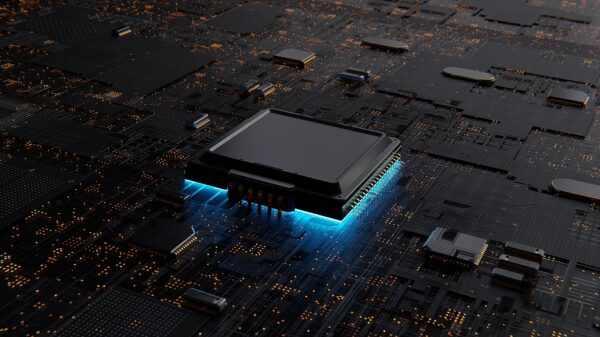
To better understand this issue, you must first understand that AI is far more than software that’s processing information. It relies on different types of chips, such as central processing units (CPUs), graphics processing units (GPUs), and neural processing units (NPUs).
While the lifespan of a CPU, GPU, or NPU used to be upwards of a decade, AI is shortening that by several years. As chips and other types of hardware become obsolete earlier than expected, it’s leading to an influx of electronics entering the waste stream.
AI Hardware Is Aging Out Faster Than Expected
Traditional data centers could get about seven years from their hardware. AI’s tremendous amount of processed data and speed at which it happens shortens that lifespan. When the cost of maintaining hardware exceeds the cost of buying new, it’s better to buy new.
Amazon reduced the useful life of its servers from six to five years. NVIDIA has been releasing new AI chips every year to keep up with advancing technology, and its competitors have been doing the same.
AI hardware must process deep learning algorithms in record time. It’s not just the speed that’s a problem. Running the hardware consumes a lot of electricity across server racks, pushing them to their thermal and electrical limits. This accelerates the breakdown of components.
Everything from GPUs to Application-Specific Integrated Circuits (ASICs) is under pressure to remain at the front of tech and AI’s evolution. As a result, AI servers become obsolete within three years. Tech giants replace AI hardware every two years to avoid costly breakdowns or obsolescence.
That means the hardware deployed in an AI data center in 2023 is already in need of replacement. This makes room for newer high-density chips that have much faster processing speeds. The older chips are fine, but they’re not competitive enough for AI’s needs.
Suddenly, electronics recycling facilities need to ramp up their efforts to refurbish or recycle tech like:
- Advanced Liquid-Cooling Manifolds
- High-Bandwidth Memory (HBM)
- Power Management Integrated Circuits (PMICs)
It’s e-waste that’s not commonly recycled, so some facilities are unable to process it as quickly as needed. If they can’t, it goes to a landfill, where it not only damages the environment but also prevents the recovery of valuable commodities that could be reused rather than mined.
U.S. Laws on E-Waste Aren’t Unified
The U.S. doesn’t have a single federal law that mandates e-waste recycling. Instead, it’s up to states to determine their own state laws. The Resource Conservation and Recovery Act (RCRA) classifies electronics as hazardous waste only if they contain a hazardous material, such as beryllium, cadmium, or lead.
However, RCRA allows exemptions to hazardous waste, which complicates things. Materials under one of these three categories are not classified as hazardous waste.
- Materials used as ingredients in the production process without first being reclaimed.
- Materials substituted for another material without first reclaiming them.
- Materials returned directly to production as feedstock or raw materials without first being reclaimed.
Plus, certain recycled materials are also not subject to RCRA rules.
Shredded circuit boards that are stored in containers that prevent their release, provided they do not contain lithium batteries, mercury relays or switches, and nickel-cadmium batteries.
Used cathode ray tubes (Used, intact, or broken)
Materials sent to a refurbisher or reseller.
Because there is no firm federal mandate, it comes down to the individual states. Only half of the 50 states have extended producer responsibility (EPR) laws. Electronics companies must take back their items. E-waste cannot go to landfills. Instead, the state operates recycling programs in different counties or regions. These programs are centered more around household electronics, however.
In Vermont, consumers, small businesses (fewer than 10 employees), school districts, and charities can drop off up to 7 electronics at a time for free. If you have more than that, there’s a fee for one grocery-sized bag of mixed small electronics. Larger companies and organizations must make special arrangements.
States are not set up to handle massive amounts of hardware from industrial-scale companies. This leaves companies struggling to find the best recycling solutions. Some opt to find an ITAD partner in a state with substantially lower fees. That discounted rate can come at a high cost to the environment and the people in it.
What’s In AI Waste?
Go back to the early 2000s, and most hardware was made of aluminum, fiberglass, and steel. Today, there’s much more to it. AI server racks contain equipment with many minerals, such as dysprosium and neodymium. They have coolers to keep server rooms cool, and those might use copper tubes for cold water or coolant in an AC system. You have gold and silicon, too.
These materials cannot be quickly or easily separated and recycled. They require specific processes such as chemical hydrometallurgy or pyrometallurgical smelting. Not every e-waste recycler is skilled at these methods, which slows down the recycling process. That doesn’t mean it’s not essential.
Turning E-Waste Into Valuable Commodities Without Harm
As the need for newer technology and the hardware it needs rises, the demand for raw materials skyrockets. Depletion of valuable metals and minerals is only part of the picture. Mining isn’t great for the environment. It can lead to all kinds of pollution.
- Brine Mining: Corrosion in storage tanks can lead to leaks that reach bodies of water.
- In Situ Leach (ISL) Mining: Acids used in the mining process can leach into ground and surface water.
- Open Pit Mining: Can expose asbestos, metallic dust, and radioactive elements.
- Underground Mining: Can release heavy metals and minerals into the groundwater.
Mining also impacts the environment through erosion, reliance on fossil fuels for mining and the transportation of equipment and materials, and excessive use of local water supplies.
By reusing materials through electronics recycling, the need to mine for new materials decreases. It’s a key driver of the circular economy. You reuse as much as you can and send old electronics for recycling to keep the cycle going.
Choosing an R2- and e-Stewards-certified electronics recycler is important for protecting the environment. It’s a major advancement over mining.
The Keys to Effective Electronics Recycling
For large quantities of AI hardware, your electronics recycling vendor needs to be equipped to handle massive volumes of electronics quickly and accurately. You want a vendor equipped with:
- Automated Identification: Equipment inspects data center arrays to quickly identify components by chemical composition, make, and model.
- Robotic Disassembly: Robotic equipment removes screws from housings, safety extracts liquid-cooling components, and separates the circuit boards without damaging them.
At the same time, you need to consider what information is stored on any hard drives you also send for recycling. You want an ITAD vendor who knows the regulatory requirements for data protection.
You need a chain of custody to follow, proof that recycling was completed, and confirmation that nothing went overseas for processing or was refurbished and resold without data being removed.
ERI Partners With You on a Sustainable Solution
AI’s breakthroughs and revolutions don’t have to lead to waste. ERI believes that copper, gold, silicon, and other valuable materials should be responsibly recycled and reused. It’s important for everyone that companies support the circular economy and take steps to close the loop.
Your state may not have specific e-waste laws yet, but that doesn’t mean you can shirk your responsibility. Building your AI data centers and server architecture with the end-of-life strategies in mind is the first step towards a sustainable solution.
Find out how you can partner with ERI to ensure your e-waste doesn’t end up causing more harm than good. We work with you to develop a solution that complies with all applicable laws, ensures items are refurbished or recycled, and protects the world we all live in.